
Enhanced Detection: Uses AI algorithms to analyze environmental data, distinguishing between false alarms and real fire threats.
Real-Time Monitoring: Continuously monitors temperature, smoke, and other indicators to provide instant alerts.
Predictive Analysis: Anticipates potential fire risks by learning from historical data and environmental conditions.
Automated Response: Triggers safety protocols, such as activating sprinklers or notifying emergency services, without human intervention.
Smart Integration: Can be integrated with other smart building systems for comprehensive safety management.
an Artificial Intelligence (AI) Fire Alarm System involves several steps to ensure optimal performance and safety. Here's a guide:
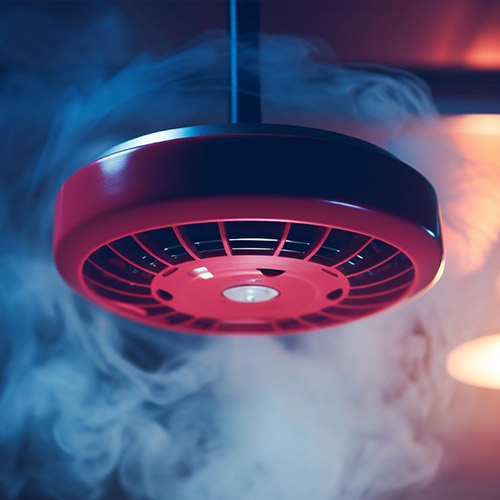
Assessment: Conduct a site survey to determine optimal sensor placement and system configuration.
Installation: Install sensors, cameras, and other necessary hardware throughout the facility according to the manufacturer's guidelines.
Integration: Connect the AI fire alarm system with existing safety systems, such as sprinklers, alarms, and emergency exits.
Set Parameters: Define sensitivity levels for smoke, heat, and other fire indicators according to the specific environment.
AI Training: If applicable, train the AI model using historical data and specific scenarios to improve accuracy.
System Calibration: Test and calibrate the sensors and AI algorithms to ensure they correctly distinguish between false alarms and actual fire threats.
Simulate Fire Scenarios: Conduct various fire and non-fire simulations to verify the system's response and accuracy.
Review Logs: Analyze the system's decisions and responses to fine-tune the AI's detection capabilities.
Emergency Drills: Perform fire drills to ensure that all safety protocols are triggered correctly and that personnel are familiar with the procedures.
Continuous Monitoring: The system will constantly monitor environmental data in real-time, analyzing for signs of fire.
Automatic Alerts: Upon detecting a potential threat, the system will send alerts to designated personnel and trigger emergency protocols.
AI Decision-Making: The AI will evaluate the situation and decide whether to activate alarms, sprinklers, or other safety measures.
Regular Inspections: Schedule routine inspections to check the hardware, sensors, and software for any issues or updates.
Software Updates: Ensure the AI software is up-to-date with the latest algorithms and threat detection models.
Data Review: Periodically review the system's logs and performance data to identify any patterns or areas for improvement.
Staff Training: Train staff on how to interact with the system, including responding to alerts and conducting manual overrides if necessary.
Emergency Protocols: Ensure all personnel are familiar with evacuation procedures and know how to respond during a fire emergency.
AI Learning: The AI system should continuously learn from new data and incidents to improve its accuracy.
Feedback Loop: Provide feedback to the system based on real-world events to refine its detection capabilities.

Quality systems include alarms and alerts for any deviations from the safe oxygen levels, ensuring immediate corrective action.

A quality system is designed to be energy-efficient, reducing operational costs while maintaining optimal performance.

High-quality systems are designed for easy maintenance, with accessible components and clear diagnostic tools.

A quality HFSS should have an intuitive user interface for easy monitoring and control.

The system should be certified by relevant fire safety and building authorities, ensuring compliance with local and international regulations.

Quality systems are scalable, allowing for easy expansion to protect larger or additional spaces.
Yes, AI fire alarm systems can integrate with smart home devices for automated responses, such as unlocking doors or alerting emergency services.
AI systems are designed to minimize false alarms by analyzing multiple factors before triggering an alert.
Installation is similar to traditional systems, though professional installation is recommended for optimal performance.
Oxygen Reduction System
Hypoxic Fire Safety system
Hypoxic Air Protection
Hypoxic Fire Prevention System
Server Room Fire Protection System
IT Room Fire Protection System
Data Center Fire Protection
AI Fire Suppression Systems
AI Fire Protection Smoke Detector
AI Fire Alarm System
AI Based Fire Protection System Project
Oxygen Fire Protection Systems
Fire Prevention system
Ai thermal camera for critical environment
Industrial UVIR Detectors
Infrared camera fire thermal
Thermal Fire Camera
Battery Fire
Flame Detector
Spark Detector
Warehouse Oxygen Reduction System
Heritage Building Fire Protection
Museum Fire Protection System
Auto Mobile Fire Safety System
IoT-based Fire Safety Systems
Passive Fire Doors
Passive Fire Protection Tunnel System
Railway Fire Fighting Systems
Deluge System
Fire And Safty Audits
Fire Contractor
Fire Alarm
Fire Extinguisher
Jet Monitor Fire Fighting
Wet Sprinkler
Foam/Rim Seal Protection
High Velocity Water Spray System
Low Velocity Water Spray System
Vehicle Fire Safety
Fire Pressurisation System
Auto Cad Design & Estimation
Detail Engineering for complete Site
Design Consultancy as required
Aerosol Extinguishing System
Co2 flooding system
FM-200 Fire Suppression Systems
NOVEC-1230
Inert Gases
LT/HT Panel Gas Flooding System
Gas Leak Detection
Fire Evacuation Maps
Very Early Smoke Detection VESDA
Nuclear Fire Detection System
Linear Heat Sensing Detection
Pollution Wipe Box for Aviation Industries
Project Management
Mock Drills
Fire Safety Training
Advance Fire System
Lithium-Ion Battery Fire Protection
Energy Storage Fire Protection System
EV Fire Suppression Systems
Fire Consultancy Services
Honeywell Fire Alarm Systems
Oxygen Sensors for Data Centers & Server Rooms
Smoke Curtain System
UL / EN Fire Curtain System
Water Curtain System
Tunnel Fire Protection System
Simplex Fire Alarm Systems
Self-Test Smoke Detectors
IG541 Fire Gas Suppression System
Bosch Fire Alarm Systems
Fire Suppression
Fire Hydrant
Electrical Panel Gas Flooding System
Fire Fighting Mask
Vermiculite Fire Spray
fire protection contractor license
Oxygen sensors for data centers and server rooms
Warehouse Fire Protection
Fire Safety Budget Estimation
Fire Fighting Project Design Services
Bus Fire Protection – Engine & Water Mist
Data Center Fire Protection Contractors