Detection
Heat at an individual sprinkler activates its thermal element; sprinklers are not normally operated by smoke alone.

Automatic water-based protection for buildings, storage and industrial risks
Survey, hydraulic design coordination, supply, installation, testing, commissioning and maintenance of wet, dry, pre-action, deluge and foam sprinkler systems.
A fire sprinkler system is an automatic water-based or agent-based network of piping and heat-responsive sprinkler heads designed to control or suppress a developing fire near its point of origin.
In conventional sprinkler systems, heat from a fire operates only the sprinkler heads exposed to sufficient temperature. Water discharges directly over the affected area, cooling burning materials, limiting fire growth and reducing heat production while occupants evacuate and firefighters respond.
Reliance Fire Protection Systems provides sprinkler surveys, design coordination, supply, installation, testing, commissioning and maintenance from Mumbai for projects across India.
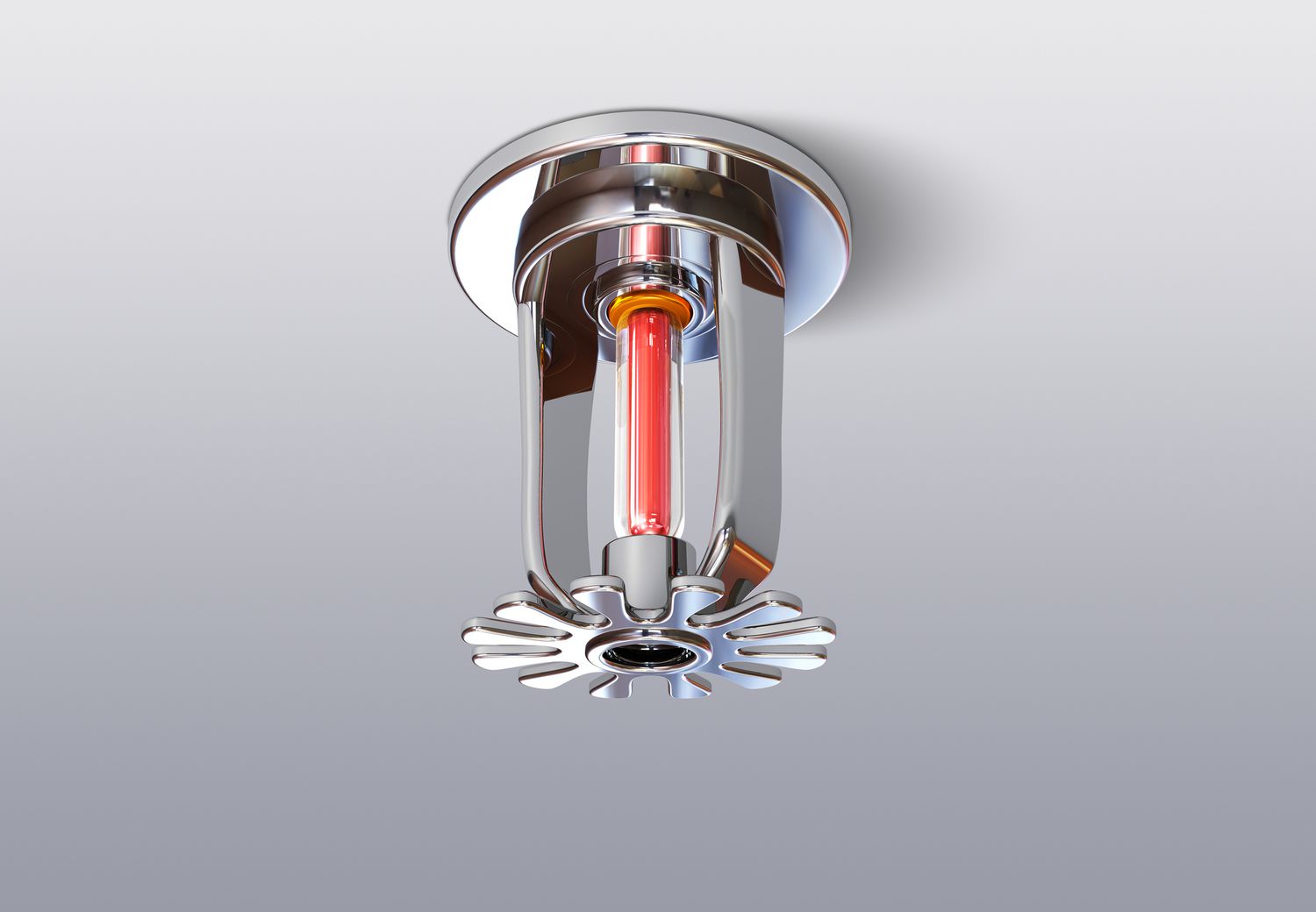
Heat at an individual sprinkler activates its thermal element; sprinklers are not normally operated by smoke alone.
Water or the selected agent cools the fire, wets surrounding materials and limits spread within the design capability.
Automatic operation provides continuous protection and helps control a fire until emergency responders arrive.
Water remains in the piping and discharges immediately through an operated sprinkler. Wet systems are common where freezing is not expected.
Pressurised air or nitrogen holds the dry-pipe valve closed. An operated sprinkler releases pressure so water enters the network.
Separate detection admits water into the piping before sprinkler discharge, with single- or double-interlock logic selected for the risk.
Open nozzles discharge together when the detection system releases the deluge valve, providing rapid coverage for high-hazard areas.
Water and foam concentrate form a solution for assessed flammable-liquid risks such as processing or storage areas.
Storage, ESFR, residential, concealed-space and water-mist applications require system-specific listings and engineering criteria.
| Design factor | What is evaluated | Why it matters |
|---|---|---|
| Occupancy and commodity | Use, fire load, storage arrangement, packaging and process hazards | Determines hazard classification and discharge criteria |
| Building and ceiling | Height, construction, slope, obstructions, concealed spaces and temperature | Affects sprinkler type, spacing and response |
| Water supply | Available flow, pressure, tank duration, pump duty and simultaneous demands | Must support the hydraulic design |
| Pipe network | Material, routing, diameter, friction loss, valves, drains and supports | Controls pressure delivery and maintainability |
| Alarm and interfaces | Flow switches, pressure switches, valve supervision, pump start and monitoring | Provides notification and system status |
Offices, malls, hotels, IT parks, mixed-use developments and corporate campuses.
Storage facilities with protection selected for commodity, packaging, rack arrangement and ceiling height.
Factories, process plants, utilities, engineering units and production areas.
High-rise buildings, housing developments, basements, parking and common areas.
Hospitals, laboratories, schools, colleges and institutional campuses.
Data centres, archives, museums, cold storage and high-value facilities using risk-appropriate systems.
Survey, design coordination, supply, installation, testing, commissioning and maintenance support are available across all Indian states and union territories, subject to project scope and local approvals.
It is an automatic network of piping and heat-responsive sprinkler heads designed to control or suppress a developing fire near its origin.
In wet, dry and pre-action systems, only heads exposed to sufficient heat normally operate. Deluge-system open nozzles discharge together.
It keeps pressurised water in the piping so water discharges immediately when an individual sprinkler operates.
Dry piping contains pressurised gas and admits water after sprinkler operation. Pre-action uses a separate detection event to admit water.
Design considers hazard, storage, ceiling height, sprinkler type and spacing, density, operating area, water supply, pump duty, pipe losses and approvals.
Testing can include pressure, flushing, valves, alarms, flow switches, pump response, inspector test and integrated commissioning.
Yes. Reliance Fire Protection Systems supports sprinkler projects across Indian states and union territories.
Share the location, occupancy, building area and height, storage details, ceiling type, drawings, water supply, approval requirements and project stage.
Call +91 96999 90424 | sales@relifire.com | Contact Reliance Fire Protection Systems