Clean-agent systems
FM-200, FK-5-1-12 and other approved agents for sensitive equipment and occupied enclosures, subject to design concentration and approvals.

Engineered suppression for critical rooms, machinery and special hazards
Survey, system selection, design coordination, supply, installation, detection and release controls, testing, commissioning and maintenance.
A fire suppression system detects or receives a fire signal and applies a suitable extinguishing agent—such as clean agent, inert gas, carbon dioxide, dry chemical, aerosol, foam, water mist or wet chemical—to control or extinguish a defined hazard.
Reliance Fire Protection Systems supplies dry and gaseous fire suppression solutions selected for the specific risk. The correct system depends on fire class, fuel, enclosure, occupied status, equipment sensitivity, agent compatibility, discharge method, residue, ventilation, environmental requirements and approvals.
We support suppression projects from survey and design coordination through supply, installation, testing, commissioning and maintenance in Mumbai and across India.
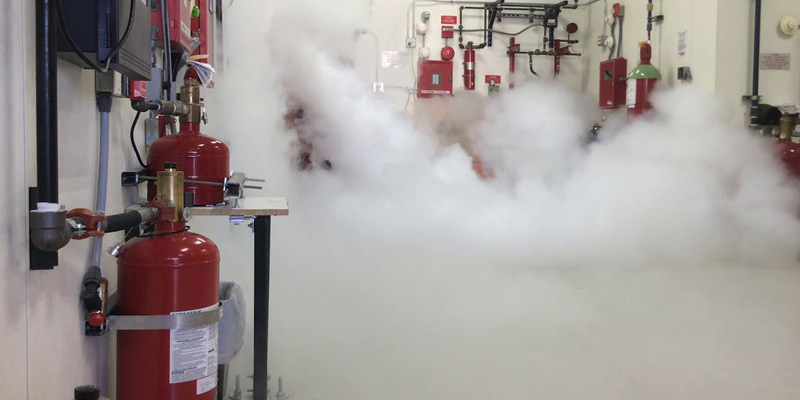
FM-200, FK-5-1-12 and other approved agents for sensitive equipment and occupied enclosures, subject to design concentration and approvals.
IG-01, IG-55, IG-100 and IG-541 systems that reduce oxygen concentration to suppress fire while protecting critical assets.
Total-flooding or local-application CO2 for suitable unoccupied or tightly controlled hazards with robust life-safety measures.
Rapid local or enclosure protection for selected machinery, panels and industrial hazards where agent compatibility is confirmed.
Foam for assessed flammable-liquid hazards and wet chemical for commercial cooking appliances and extraction systems.
Fine-droplet systems that cool, displace local oxygen and reduce radiant heat using system-specific design and listed components.
The existing product information on this page describes BOC FS 125 as a compact gaseous suppression system intended for Class A, B and C fire hazards and designed to provide protection while using limited installation space.
Product verification: Current agent availability, listing status, environmental acceptability, design concentration, exposure limits and local approval must be verified from the current manufacturer documentation before specification.
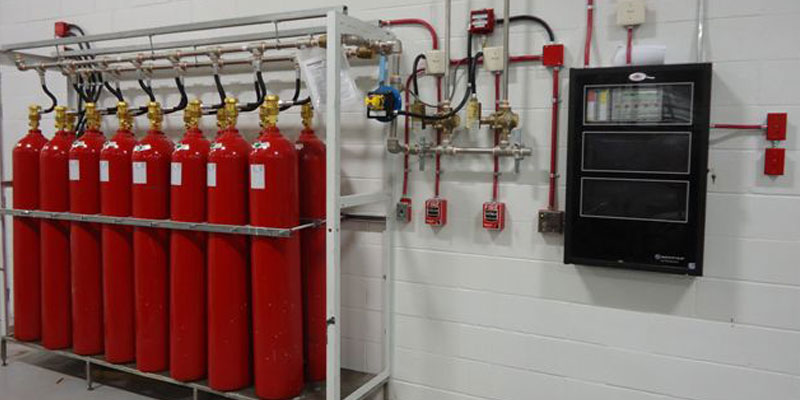
Clean-agent or inert-gas protection for servers, network equipment, UPS and critical digital infrastructure.
Protection for switchgear, substations, control panels, automation rooms and electrical enclosures.
Local protection for production equipment, CNC machines, turbines, engines and process hazards.
Low-residue protection for documents, collections, heritage assets and secure storage.
Wet-chemical protection for appliances, hoods, filters and extraction ducts in commercial kitchens.
Foam, dry chemical, water spray or other engineered systems for assessed storage and processing hazards.
Survey, design coordination, supply, installation, testing, commissioning and maintenance support are available across all Indian states and union territories, subject to project scope, system approvals and local requirements.
It applies a suitable extinguishing agent—such as clean agent, inert gas, CO2, dry chemical, aerosol, foam, water mist or wet chemical—to a defined hazard.
Selection considers fire class, fuel, enclosure, occupancy, equipment sensitivity, compatibility, residue, ventilation, environmental requirements and approvals.
Total flooding develops an extinguishing concentration throughout an enclosure; local application directs agent at a specific hazard.
Data centres, server rooms, electrical rooms, control rooms, archives, telecom facilities and other critical enclosures.
Controls may include cross-zoned detection, pre-discharge alarms, delay, manual release, abort, shutdown interfaces and warning signs.
Testing can include release logic, alarms, controls, interfaces, actuator simulation, pipe and nozzle checks, cylinder status and room integrity.
Yes. Reliance Fire Protection Systems supports suppression projects across Indian states and union territories.
Share the location, protected hazard, room dimensions, occupancy, ventilation, equipment, required agent or approval, drawings and project stage.
Call +91 96999 90424 | sales@relifire.com | Contact Reliance Fire Protection Systems