Fire hazards and occupancy
Review building use, processes, combustible materials, ignition sources and operating changes.

Site inspection, documented findings and corrective-action planning
Fire audit enquiries for factories, warehouses, process facilities and industrial infrastructure across India, with coordination from Mumbai and a scope tailored to the actual hazards and operations.
A fire safety audit is a structured review of a premises’ fire hazards, protection measures, escape arrangements, emergency preparedness and supporting records against an agreed scope and applicable requirements. It identifies observations and corrective actions; it is not a guarantee that a fire cannot occur.
Reliance Fire Protection Systems supports fire safety audit enquiries for existing premises, changes of use, system upgrades and project reviews. Scope, inspection methods, testing and reporting are agreed around the actual hazards, operating constraints and applicable requirements.
A coordinated review connects prevention, detection, warning, suppression, escape, emergency access and maintenance. The required solution is selected for the project rather than applying one layout to every premises.
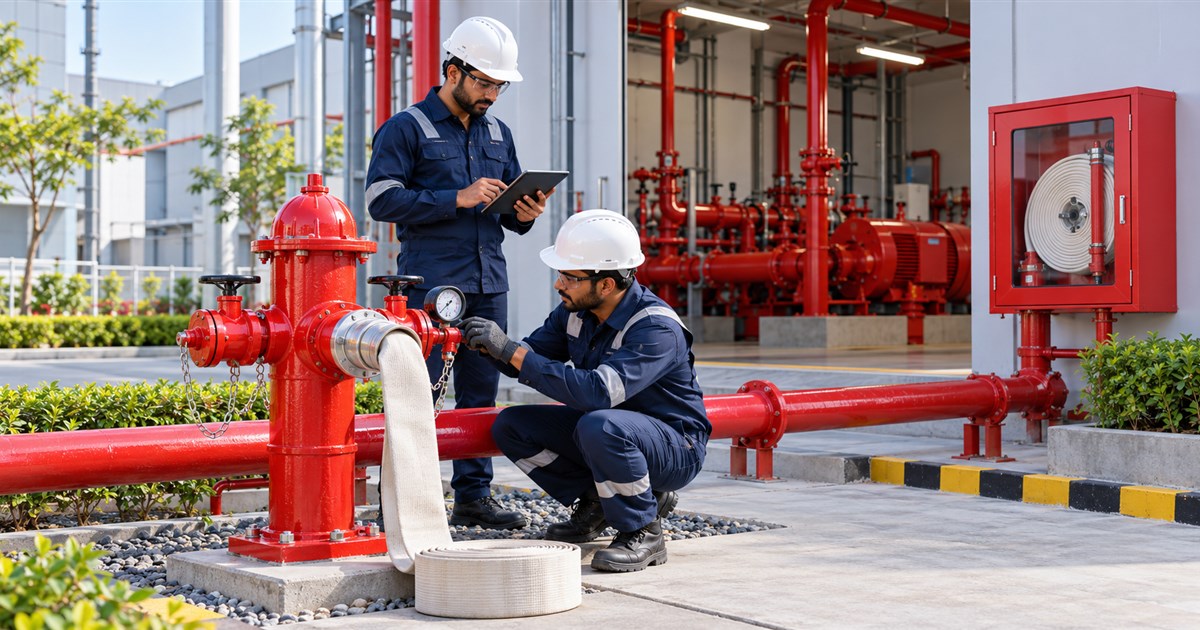
Illustrative fire-protection image; audit scope, findings and test requirements are defined for the actual premises.
Review building use, processes, combustible materials, ignition sources and operating changes.
Review the agreed extinguisher, hydrant, sprinkler, pump and specialist-system scope, with test requirements defined separately.
Assess alarm and detection arrangements, available records, faults and relevant interfaces.
Review exit routes, signs, emergency lighting, obstructions and access within the agreed scope.
Review maintenance, testing, previous findings, training, drills and emergency responsibilities.
Document observations, evidence, limitations, priorities and proposed corrective work.
Enquiries cover manufacturing, engineering, automotive, process, warehouse and logistics facilities. The audit should account for the material inventory, plant layout, electrical and mechanical equipment, utilities, maintenance activities and emergency arrangements.
Agree the survey method, operational restrictions, records, test requirements and specialist boundaries before the site visit. Findings must distinguish observed conditions from unavailable evidence and untested functions.
| Project type | Information to assess |
|---|---|
| Manufacturing and engineering plants | Processes, ignition sources, machinery, combustible deposits, electrical equipment and maintenance practices. |
| Process and hazardous-material areas | Material information, storage, handling, containment, compatible protection and the need for separately scoped specialist studies. |
| Warehouses and logistics facilities | Commodities, storage arrangement, loading operations, access, water supply and system inspection records. |
| Utilities and supporting infrastructure | Electrical rooms, batteries, fuel areas, workshops, control rooms, alarms and equipment interfaces. |
Confirm site details, objectives, existing documents, scope boundaries and required deliverables.
Review the premises, available records, hazards, existing controls and project requirements.
Provide agreed observations, supporting evidence, scope limitations, priorities and recommended corrective actions.
Agree closure evidence, responsibility for corrective work and any follow-up verification or testing.
Confirm applicable requirements, approval conditions, accepted references and any prescribed auditor or agency credentials for the facility. An audit is not a substitute for statutory approval, process safety studies, electrical certification or performance tests outside the agreed scope.
Document inspection and testing limitations, inaccessible areas, unavailable records and operational restrictions. Assign corrective actions, priorities and closure evidence to the responsible site team.
Reliance Fire Protection Systems supports Fire Safety Audit Services and project enquiries across all Indian states and union territories. Survey, design and project support are coordinated from Mumbai according to the site hazards, deliverables and applicable requirements.
Delhi is a union territory; Delhi NCR also includes locations in neighbouring states. Enquiry coverage does not indicate a local office in each state or union territory.
Our Fire Safety Audit Services support covers enquiries for the following industrial zones, IT parks, SEZs, logistics hubs and manufacturing clusters across India. Survey, supply, execution and service arrangements are agreed for each site.
A fire safety audit is a structured review of a premises’ fire hazards, protection measures, escape arrangements, emergency preparedness and supporting records against an agreed scope and applicable requirements. It identifies observations and corrective actions; it is not a guarantee that a fire cannot occur.
The agreed review can assess combustible storage, flammable materials, process heat, hot work, electrical equipment, batteries, utilities, housekeeping, ignition controls and adjacent exposures. Specialist process or explosion studies require a separately defined scope and suitable competence.
The agreed review may cover extinguishers, hydrants, sprinklers, pumps, detection and alarms, escape routes, emergency lighting, signs, access, passive measures, control interfaces, maintenance records and emergency procedures. Coverage depends on the building, hazards and required deliverables.
Enquiries are supported for factories, engineering and automotive premises, process facilities, warehouses, logistics sites, industrial offices and supporting infrastructure. The review must reflect the actual occupancy, processes, materials, equipment, utilities and operating conditions.
No. An audit report identifies findings within its scope. Statutory approvals, authority inspections, required certificates and any prescribed specialist studies are separate matters. Confirm the relevant authority, process and auditor or agency credentials for the actual facility.
Provide current plans, previous approval conditions, fire-system drawings, equipment schedules, maintenance and test records, previous audit reports, training and drill records, process or storage details and information on changes to the premises.
Not automatically. Define visual inspection, document review and any functional or performance tests before the visit. Tests require suitable access, competent personnel, agreed procedures, operational permission and management of system impairments.
Agreed deliverables may include the scope, site information, reviewed documents, observations, evidence, identified gaps, priorities and recommended corrective actions. Sampling, inaccessible areas, unavailable records and test limitations should be recorded.
Frequency depends on applicable requirements, approval conditions, occupancy, hazards, changes and the facility’s inspection programme. Confirm any prescribed audit or certification schedule with the competent authority rather than applying one interval to every site.
Corrective-work planning, design reviews, equipment upgrades, maintenance actions and follow-up verification can be discussed separately. Responsibilities, deadlines, testing and closure evidence should be agreed for each finding.
Reliance Fire Protection Systems supports industrial fire-safety audit and project enquiries from Mumbai across all 28 Indian states and 8 union territories. Site visits, deliverables, service arrangements and applicable credentials are confirmed for each facility and jurisdiction.
Share the site address, occupancy, floor area and height, number of buildings, drawings, fire-system details, approval conditions, required audit scope and report format, test expectations and schedule. Call +91 96999 90424 or email sales@relifire.com.
Share your site address, plans, existing systems and required audit deliverables for a project-specific scope.