Hydrant, hose and standpipe systems
Review landing valves, hose reels, fire mains, fittings and the required pressure and coverage for the facility.

Fire-fighting systems and advanced fire engineering support
Design coordination, supply, installation, testing, commissioning and maintenance enquiries for hydrants, sprinklers, pumps, detection interfaces and suitable fire-protection systems for industrial, commercial and residential projects.
A fire-fighting system is an engineered arrangement of equipment, water or other suitable agents, controls and supporting infrastructure intended to control or extinguish fire for a defined hazard. It forms part of a wider fire and life-safety strategy that includes detection, warning, escape and maintenance.
Reliance Fire Protection Systems supports project enquiries from Mumbai for new installations, expansions, upgrades and lifecycle service. The scope is coordinated with the building use, process hazards, available infrastructure and approval requirements.
Fire-fighting equipment must be selected as a complete working arrangement, including water supply, pressure, control interfaces, access, testing and maintenance. One standard layout does not suit every building or industrial hazard.
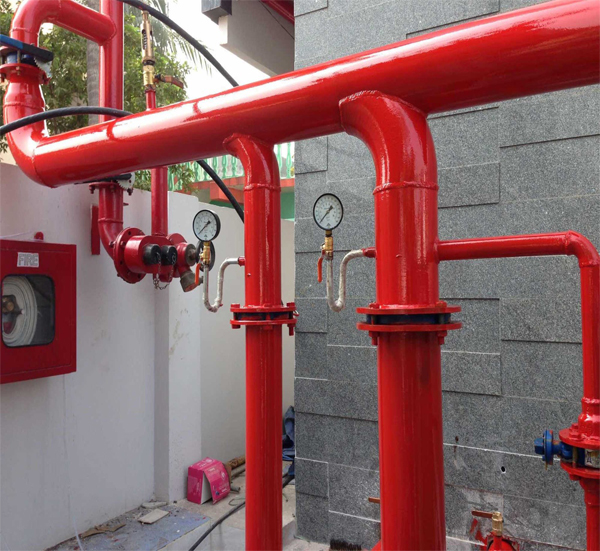
Review landing valves, hose reels, fire mains, fittings and the required pressure and coverage for the facility.
Coordinate the suitable sprinkler, deluge or water-spray arrangement with the occupancy, hazard, water demand and system application limits.
Assess the required pump arrangement, controls, available supply, storage and connections against the calculated design demand.
Support hazard reviews, system layouts, hydraulic calculations, BOQs, technical submissions and interfaces within the agreed project scope.
Coordinate equipment supply, mechanical and electrical work, inspections, functional tests, documentation and operational handover.
Support fire-safety audit enquiries, system-condition reviews, maintenance planning and corrective work according to the site and applicable credentials.
| Facility | Scope to assess | Important inputs |
|---|---|---|
| Commercial and residential buildings | Hydrants, sprinklers, pumps, detection and passive interfaces | Occupancy, height, floor plans, escape strategy and authority conditions |
| Industrial and manufacturing facilities | Hazard-specific water or specialist protection | Processes, fuels, equipment geometry, electrical interfaces and water compatibility |
| Warehouses and logistics facilities | Storage-related detection, water supply and suppression | Stored commodities, arrangement, height, access and operating requirements |
| IT parks, SEZs and data facilities | Detection, building protection and suitable critical-room systems | Equipment, room boundaries, ventilation, business operations and interfaces |
| Healthcare, education and public facilities | Occupancy-specific fire and life-safety coordination | Occupant needs, warning, access, evacuation and maintenance responsibilities |
Collect plans, hazards, occupancy, existing systems, water and power information and project requirements.
Define the design basis, layout, calculations, equipment, scope boundaries and authority submissions.
Coordinate equipment, pipework, electrical work and the required pressure, operational and interface tests.
Provide agreed drawings, records, equipment instructions and operator handover, then plan inspections and maintenance.
The BIS National Building Code information identifies fire and life safety within the building-code framework. Review the applicable Indian requirements, local authority conditions and accepted project design basis.
Where specified, relevant references can include NFPA 13 for sprinkler installation, NFPA 20 for stationary fire pumps and NFPA 25 for water-based system maintenance. Confirm the relevant edition and applicability rather than treating every reference as a statutory requirement for every site.
Equipment markings, company credentials and building approvals must be verified separately. Final statutory decisions rest with the competent authority.
Reliance Fire Protection Systems supports advanced fire engineering services enquiries across all Indian states and union territories. Fire-fighting system, installation, audit and maintenance scope is coordinated for the project location, hazards and applicable requirements.
Delhi is listed as a union territory; the wider NCR also includes locations in neighbouring states. Nationwide enquiry support does not imply a local office in every state or union territory.
Our fire-fighting systems, advanced fire engineering and Fire Safety Audit Services support covers enquiries for the following industrial zones, IT parks, SEZs, logistics hubs and manufacturing clusters across India. Site execution and audit scope are confirmed for the actual facility, access and applicable qualifications.
A fire-fighting system is an engineered arrangement of equipment, water or other suitable agents, controls and supporting infrastructure intended to control or extinguish fire for a defined hazard. It forms part of a wider fire and life-safety strategy that includes detection, warning, escape and maintenance.
The agreed scope may include hydrants, hose reels, standpipes, automatic sprinklers, fire pumps and water storage, deluge or water spray, suitable specialist suppression and portable extinguishers, with fire detection and control interfaces as required.
Hydrant and hose systems provide water for manual firefighting. Automatic sprinklers normally operate individually when their heat-sensitive elements activate. Deluge systems use open outlets supplied through a control valve and a separate release arrangement.
It can include hazard review, system selection, layout coordination, hydraulic calculations, pump and storage review, control interfaces, technical submissions and coordination with the building fire strategy. The required deliverables are defined by the project and applicable approval process.
Sizing depends on the required design demand, pressure, duration, hydraulic losses and any simultaneous system demands. Building use, height, hazard, site layout and applicable requirements must be reviewed rather than applying one pump or tank size to every site.
Yes, an upgrade can be assessed using drawings, site surveys, equipment condition, available water supply, proposed changes and operating constraints. Reuse suitability, impairments and testing should be agreed before work starts.
No. System installation, equipment certification and building fire approval are different matters. The design and completed work must be coordinated with the relevant requirements and authority process; the contractor does not automatically grant statutory approval.
Suitable monitored interfaces can be included where the selected equipment supports the required functions. Define compatible devices, alarm and fault signals, the approved cause-and-effect sequence and commissioning tests before implementation.
Follow the approved design, manufacturer instructions, applicable requirements and site maintenance plan. Inspection and testing may cover pumps, tanks, valves, hydrants, sprinklers, nozzles, alarms, release controls, faults, obstructions and records.
Reliance Fire Protection Systems supports fire-fighting system, advanced fire-engineering and fire-safety audit enquiries from Mumbai for all Indian states and union territories. Survey, execution and maintenance scope depend on the site, applicable credentials and project requirements.
Share the site location, building use, plans and height, hazard information, required systems, existing equipment, water and power availability, specifications, approval conditions and installation, upgrade or maintenance scope.
Share the site location, building use, plans and height, hazard information, required systems, existing equipment, water and power availability, specifications, approval conditions and installation, upgrade or maintenance scope.
Call +91 96999 90424 | sales@relifire.com | Contact Reliance Fire Protection Systems