Hazard and design-basis review
Define tunnel type, geometry, occupancy, traffic or equipment hazards, scenarios and project responsibilities.

Integrated fire safety for tunnel infrastructure
Project enquiries for detection, firefighting and integrated emergency systems, with coordination from Mumbai and a design basis tailored to the tunnel’s use, hazards and operating strategy.
Tunnel fire protection is a coordinated arrangement of prevention, incident detection, warning, firefighting, smoke management, evacuation support and emergency response. The strategy is engineered for the tunnel’s use, geometry, traffic or equipment hazards, operating conditions and approval requirements.
Reliance Fire Protection Systems supports surveys, design coordination, equipment supply, installation, testing, audit and maintenance enquiries for project locations across India.
Road, rail and utility tunnels require different assessment. Detection, firefighting, ventilation, evacuation, drainage, passive protection and operator response must be coordinated so that their actions support the agreed safety strategy.
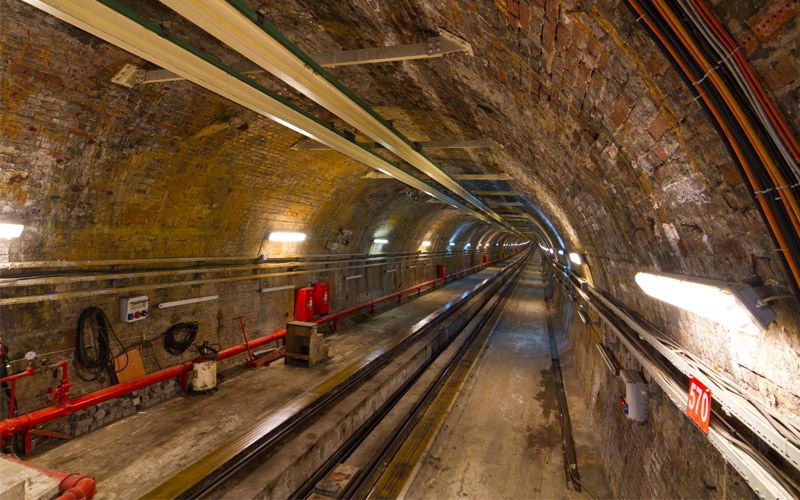
Illustrative tunnel image; it does not identify a completed Reliance project or specify a road-tunnel system layout.
Define tunnel type, geometry, occupancy, traffic or equipment hazards, scenarios and project responsibilities.
Review suitable detection, incident location, notifications, control-centre signals and maintenance access.
Assess suitable water-based or other protection, zoning, supply, discharge, drainage and operating logic.
Coordinate smoke-control scenarios, system priorities, communications and failure responses with specialists.
Review structural protection, cable resilience, escape interfaces, emergency lighting and responder access.
Define integrated commissioning, documentation, training, maintenance, impairment controls and change reviews.
Enquiries are supported for new tunnel projects, existing-system reviews and associated control buildings, electrical rooms and service infrastructure across India. Site visits, engineering deliverables, specialist studies, execution and maintenance arrangements are agreed for the individual project.
| Tunnel type | Key inputs |
|---|---|
| Road tunnels | Geometry, traffic direction and congestion, vehicle hazards, incident management, escape, ventilation and responder access. |
| Rail and transit tunnels | Rolling stock, passenger operations, traction interfaces, evacuation, communications and operator requirements. |
| Utility and service tunnels | Cables, equipment, occupancy, access, ventilation, fire separation and restoration needs. |
| Associated buildings and rooms | Electrical, control, pump and equipment hazards, occupancy, boundaries and compatible protection. |
Airflow and smoke-control operations interact with detection, suppression, occupant movement and responder access. Agree operating scenarios, control priorities, interfaces and verification criteria through the integrated tunnel safety strategy.
No single detector or suppression technology replaces the complete tunnel safety strategy. Define the objective, scope, interface responsibilities and system limitations before selecting equipment.
Collect geometry, operations, hazards, utilities, existing systems and approval conditions.
Define scenarios, systems, calculations, interfaces, specialist responsibilities and deliverables.
Coordinate equipment, inspections, functional tests and agreed integrated system verification.
Provide agreed records, operator handover, maintenance plans and impairment procedures.
PIARC’s fixed firefighting guidance discusses system selection and integration in road tunnels. Its ventilation guidance addresses interaction with other safety equipment.
Road-tunnel references must not be applied indiscriminately to rail or utility tunnels. Confirm applicable Indian requirements, owner specifications, accepted design references and competent-authority conditions for the actual project.
Reliance Fire Protection Systems supports tunnel fire protection and Fire Safety Audit Services enquiries across all Indian states and union territories. Survey, design and project support are coordinated from Mumbai according to the site hazards, deliverables and applicable requirements.
Delhi is a union territory; Delhi NCR also includes locations in neighbouring states. Enquiry coverage does not indicate a local office in each state or union territory.
Our fire protection and Fire Safety Audit Services support covers enquiries for the following industrial zones, IT parks, SEZs, logistics hubs and manufacturing clusters across India. Survey, supply, execution and service arrangements are agreed for each site.
Tunnel fire protection is a coordinated arrangement of prevention, incident detection, warning, firefighting, smoke management, evacuation support and emergency response. The strategy is engineered for the tunnel’s use, geometry, traffic or equipment hazards, operating conditions and approval requirements.
No. Road traffic, rail operations and utility infrastructure have different hazards, occupancy, access, evacuation and operating requirements. The design basis and applicable references must be established for the actual tunnel type.
Suitable linear heat, flame, video or other detection may be reviewed for the tunnel environment, visibility, airflow, coverage, maintenance access and required response. Technology selection must be supported by application-specific suitability and commissioning.
The need and type depend on applicable requirements, the tunnel safety strategy, hazards and engineering assessment. If selected, the system must be coordinated with detection, ventilation, drainage, evacuation, water supply and operating procedures.
No. Define the protection objective, tunnel geometry, fire scenarios, traffic or equipment, airflow, water demand, coverage, zones and relevant test evidence. Different water-based technologies are not automatically interchangeable.
Airflow and smoke-control operations interact with detection, suppression, occupant movement and responder access. Agree operating scenarios, control priorities, interfaces and verification criteria through the integrated tunnel safety strategy.
The project may assess structural fire resistance, protective materials, cable protection, compartmentation, cross-passage doors and equipment resilience where relevant. Required performance and supporting evidence must follow the tunnel’s accepted design basis.
Depending on tunnel use, review warning, communications, emergency lighting, signs, escape and access arrangements, control-centre functions, emergency power and responder procedures. Responsibilities and interfaces must be defined for the project.
Define system inspections, functional and interface tests, agreed discharge or performance tests, alarm and fault responses, records and operator training. Maintenance must address tunnel environmental conditions, access, impairments and changes to operations.
Existing systems can be reviewed using drawings, condition, maintenance and incident records, current operations, utility availability and proposed changes. Define compatibility, access, traffic or operating restrictions, temporary impairments and integrated verification before upgrades.
Reliance Fire Protection Systems supports tunnel fire protection and Fire Safety Audit Services enquiries across all 28 Indian states and 8 union territories. Scope, specialist responsibilities, credentials and site arrangements are agreed for each project.
Share the tunnel location and type, length and cross-section, plans, gradients, traffic or equipment hazards, ventilation, water supply, drainage, existing systems, approval conditions and required scope. Call +91 96999 90424 or email sales@relifire.com.
Share tunnel drawings, use, hazards, operating strategy and required scope for a project-specific review.