Hazard assessment and priorities
Identify ignition sources, combustible materials, process conditions, affected people and credible fire scenarios.

Risk assessment, ignition control and ongoing readiness
Reliance Fire Protection Systems supports fire prevention reviews, engineering coordination, monitoring, maintenance and training enquiries for industrial, commercial and infrastructure projects across India.
A fire prevention system is a coordinated programme of engineering, operational and management controls that reduces the likelihood of ignition and hazardous fire conditions. It can include hazard assessment, ignition and fuel control, inspections, monitoring, maintenance, training and action tracking.
Effective prevention starts with how a facility operates: the materials present, how equipment can become an ignition source, what changes during maintenance and how defects are reported and corrected.
A coordinated programme also maintains detection, alarms, suppression, compartmentation and emergency arrangements. Technology is selected for a defined hazard, with responsibilities and response procedures agreed for the site.
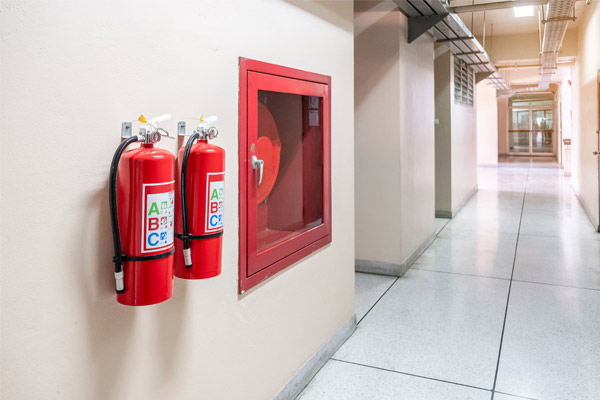
Illustrative fire equipment image. Equipment is one part of a wider prevention and protection programme; the image does not establish a completed Reliance project.
Identify ignition sources, combustible materials, process conditions, affected people and credible fire scenarios.
Review electrical and mechanical conditions, hot work, storage, material compatibility, waste and housekeeping.
Assess suitable detection, thermal or gas monitoring, alerts and operator response for defined hazards.
Review detection, alarms, suppression, compartmentation and interfaces within the overall fire-safety strategy.
Define inspections, equipment tests, defect reporting, impairments, restoration and change management.
Agree responsibilities, staff awareness, drills, emergency arrangements and follow-up of identified actions.
| Review area | What to assess |
|---|---|
| Electrical and mechanical equipment | Condition, overheating, faults, maintenance records, operating limits and competent inspection needs. |
| Storage and housekeeping | Combustible accumulation, waste, compatibility, quantities, clearances and access. |
| Hot work and contractors | Authorisation, ignition hazards, precautions, supervision, isolations and completion checks. |
| Process and specialist hazards | Actual chemicals, dusts, gases, batteries or high-temperature processes and the need for specialist assessment. |
| Protection and operational readiness | System availability, inspections, defects, impairments, escape routes, staff roles and emergency arrangements. |
Define the programme around the actual occupancy, processes, materials and operating conditions. Specify equipment performance, response actions, inspection limits and maintenance responsibilities rather than relying on unsupported prediction or zero-risk claims.
Applicable Indian project requirements, local authority conditions and insurer criteria must be reviewed separately. An audit or monitoring installation does not automatically establish compliance or grant approval.
Technical reference: HSE fire safety guidance explains the role of ignition sources, fuels and risk assessment. Specialist oxygen-reduction systems have their own scope under ISO 20338:2019; they require application-specific engineering and personnel assessment.
Collect plans, hazards, materials, records, existing protection and operational constraints.
Define controls, specialist reviews, equipment needs, responsibilities and the agreed work scope.
Coordinate procedures, equipment, staff guidance and agreed inspection or functional checks.
Track actions and defects, test required systems and review changes, incidents or impairments.
Reliance Fire Protection Systems supports fire prevention and Fire Safety Audit Services enquiries across all Indian states and union territories. Project enquiries are coordinated from Mumbai, with surveys, technical responsibilities, implementation and service scope confirmed for the facility.
Delhi is a union territory; Delhi NCR also includes locations in neighbouring states. Enquiry coverage does not indicate a local office in each state or union territory.
Our fire prevention and Fire Safety Audit Services support covers enquiries for the following industrial zones, IT parks, SEZs, logistics hubs and manufacturing clusters across India. Survey, supply, execution and service arrangements are agreed for each site.
A fire prevention system is a coordinated programme of engineering, operational and management controls that reduces the likelihood of ignition and hazardous fire conditions. It can include hazard assessment, ignition and fuel control, inspections, monitoring, maintenance, training and action tracking.
Prevention reduces the likelihood of a fire starting. Detection and alarms provide warning, while suppression and containment address a fire and its effects. These functions form part of a coordinated fire-safety strategy and should not be treated as interchangeable.
Review electrical faults, hot work, hot surfaces, friction, static, smoking, combustible storage, waste, flammable liquids and gases, and process-specific hazards. The scope should reflect the building use, materials, equipment, people and operating conditions.
No. Sensors and analytics may help identify defined conditions or support event review, but their coverage and performance have limits. They do not replace engineering controls, housekeeping, maintenance, competent supervision or required fire protection systems.
Control combustible accumulation, waste and storage near ignition sources, and maintain the required access and escape arrangements. Review storage changes, material compatibility, quantities and separation as part of the site-specific assessment.
Agree a site procedure covering authorisation, hazard review, suitable precautions, supervision, isolation where required and completion checks. Work on fire systems also needs an agreed impairment and restoration process with the responsible site team.
These technologies may be considered where a defined hazard and suitable equipment justify them. Confirm the measurement or detection objective, location, environmental limits, alarm response, maintenance and any control interfaces before deployment.
No. Oxygen reduction is a specialist option for suitable enclosed applications. It requires material and enclosure assessment, engineered atmospheric control, personnel access review and project acceptance. A generic oxygen percentage is not a universal safe or effective setting.
Enquiries can cover factories, warehouses, logistics facilities, offices, hotels, healthcare, education, residential developments, data facilities and infrastructure. Specialist process, chemical, battery or dust hazards need an appropriately defined assessment.
Set review and inspection frequencies according to the applicable requirements, equipment instructions and site risks. Reassess after relevant changes to materials, equipment, layout or operations, and after incidents, defects or protection impairments.
Reliance Fire Protection Systems supports fire prevention and Fire Safety Audit Services enquiries from Mumbai across all 28 Indian states and 8 union territories. Surveys, technical responsibilities, implementation, training and service arrangements are agreed for each project.
Share the site location, building use, drawings, process and storage information, existing protection, incident or inspection records, authority comments if available and proposed work scope. Call +91 96999 90424 or email sales@relifire.com.
Share the site location, facility use, hazards, existing controls and proposed review or implementation scope.